diode(a−b−.25)
diodes= a - b - 0.25, or 0 where that is negativediode(a-b) shifted down by 0.25: a passes when it exceeds b by more than 0.25. Only positive results matter: a negative result becomes 0, which limits a bipolar signal to unipolar values.
SEE IT MOVE
Computed in your browser with KINSPIRATION's FUN engine. Drag on the map to try any a and b.
WHAT TO KNOW
INPUTS
a: the signal; b: the threshold.
OUTPUT RANGE
0..+0.75 for a unipolar a
USE IT FOR
A dead zone of 0.25 above the threshold: a controller that does nothing for its first quarter (b OFF).
WATCH OUT
The factory's 2 slots (GKeyNum and 0.90) can never pass: GKeyNum stays below 1.15.
IN THE FACTORY PROGRAMS
In 2 FUN slots of the factory programs: FUN1 2. GFUN2 and GFUN4 are the program's global FUNs.
MOST USED INPUTS (a, b)
WHERE THE OUTPUT GOES
FIND THEM ON YOUR K2700
HOW TO ON YOUR K2700 · 611 Robin's Lead
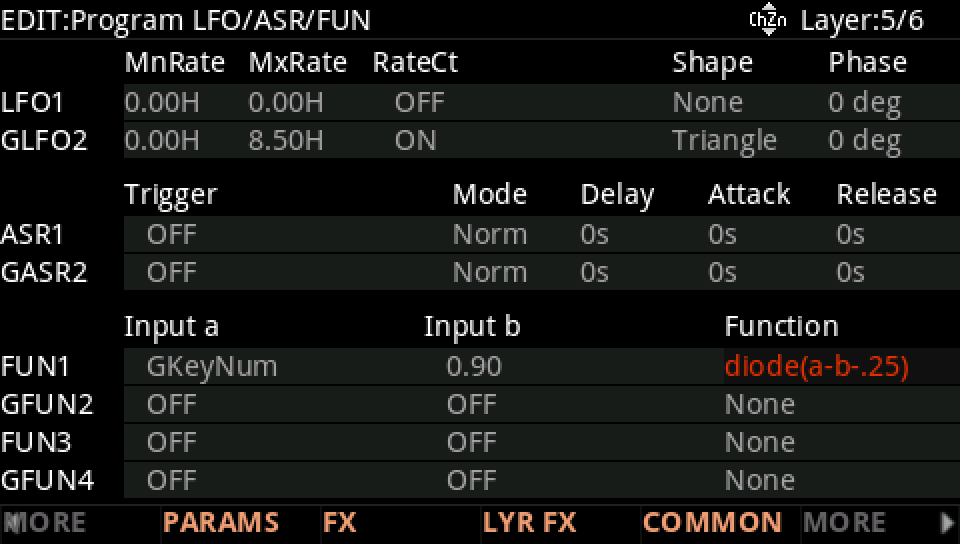
Robin's Lead uses diode(a-b-.25) on its layer 5: see it, then where it goes.
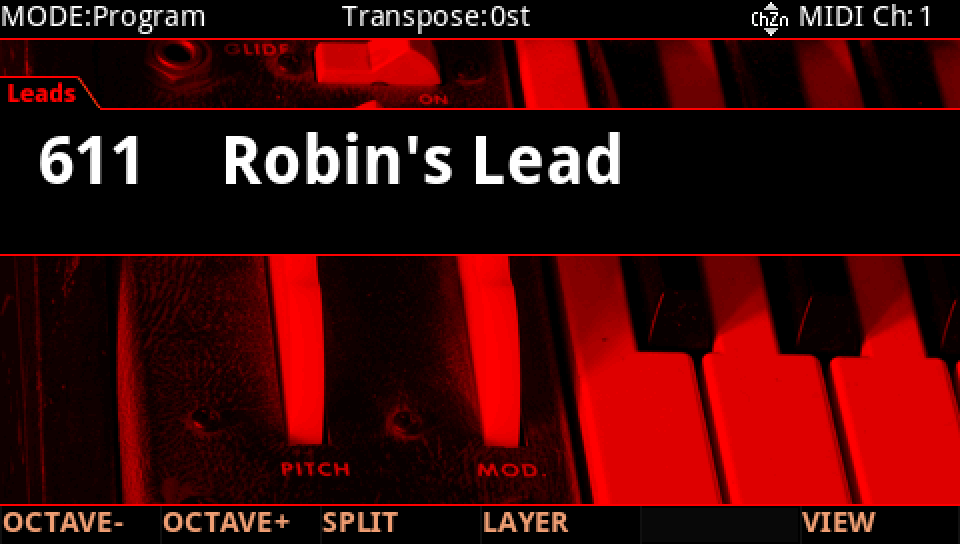
In Program mode choose 611 Robin's Lead (KEYPAD, 611, ENTER).
Press EDIT, go to layer 5 with CHANNEL/LAYER ▲, then MORE and LFO+. The FUN1 row: Input a GKeyNum, Input b 0.90, Function diode(a-b-.25).
Where it goes: MORE, DSP MOD. On the Amp row Source 1 is FUN1, with a Depth of 0 dB.
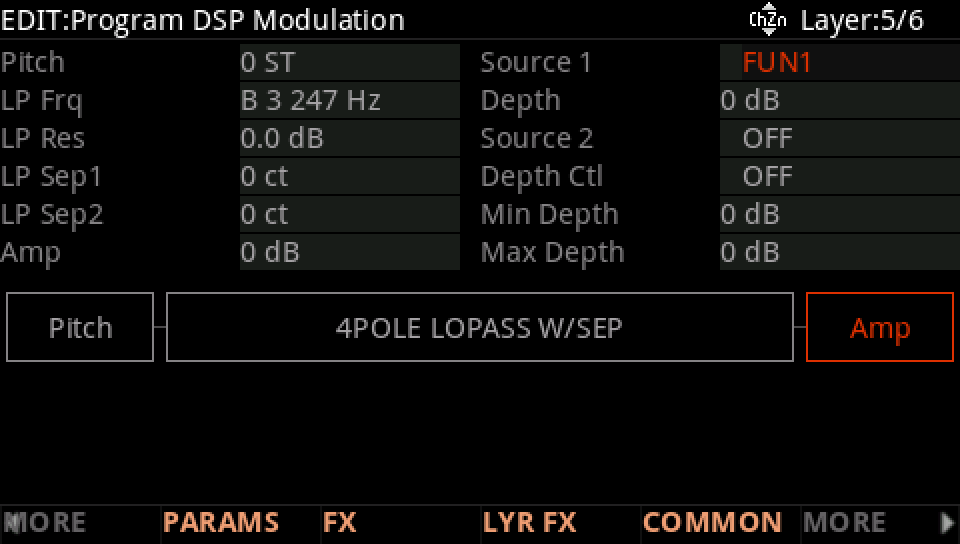
Play low notes, then high ones: the Amp row follows FUN1.
Press EXIT and answer NO to leave the factory program as it was, or SAVE to keep your version on a USER ID.