diode(a−b+.25)
diodes= a - b + 0.25, or 0 where that is negativediode(a-b) shifted up by 0.25: a passes once it is less than 0.25 below b. Only positive results matter: a negative result becomes 0, which limits a bipolar signal to unipolar values.
SEE IT MOVE
Computed in your browser with KINSPIRATION's FUN engine. Drag on the map to try any a and b.
WHAT TO KNOW
INPUTS
a: the signal; b: the threshold.
OUTPUT RANGE
0..+1
USE IT FOR
A softer opening than diode(a-b): with b OFF a bipolar LFO passes from -0.25 up.
WATCH OUT
With b at 0 a bipolar LFO passes from −0.25 up, a little more than half its swing.
IN THE FACTORY PROGRAMS
In 3 FUN slots of the factory programs: GFUN2 1, FUN2 1, FUN1 1. GFUN2 and GFUN4 are the program's global FUNs.
MOST USED INPUTS (a, b)
WHERE THE OUTPUT GOES
FIND THEM ON YOUR K2700
HOW TO ON YOUR K2700 · 2046 Editor Template
The factory does not route diode(a-b+.25) to a sound on its own: set one up on 2046 Editor Template and hear it on the pitch.
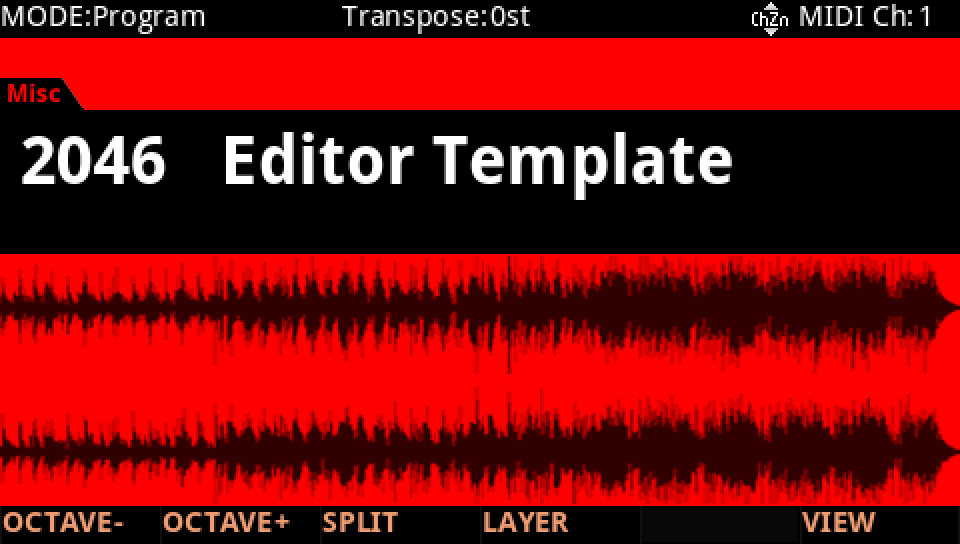
In Program mode choose 2046 Editor Template, a plain one-layer program to build on (KEYPAD, 2046, ENTER).
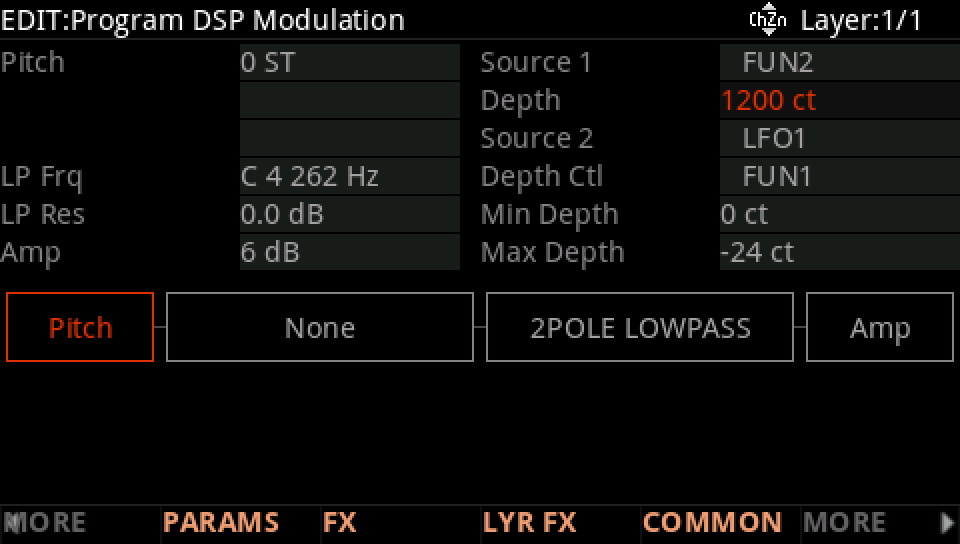
Press EDIT, then MORE and DSP MOD. On the Pitch row set Source 1 to FUN2 and its Depth to 1200 ct: FUN2's result, −1 to +1, now bends the pitch up to an octave either way.
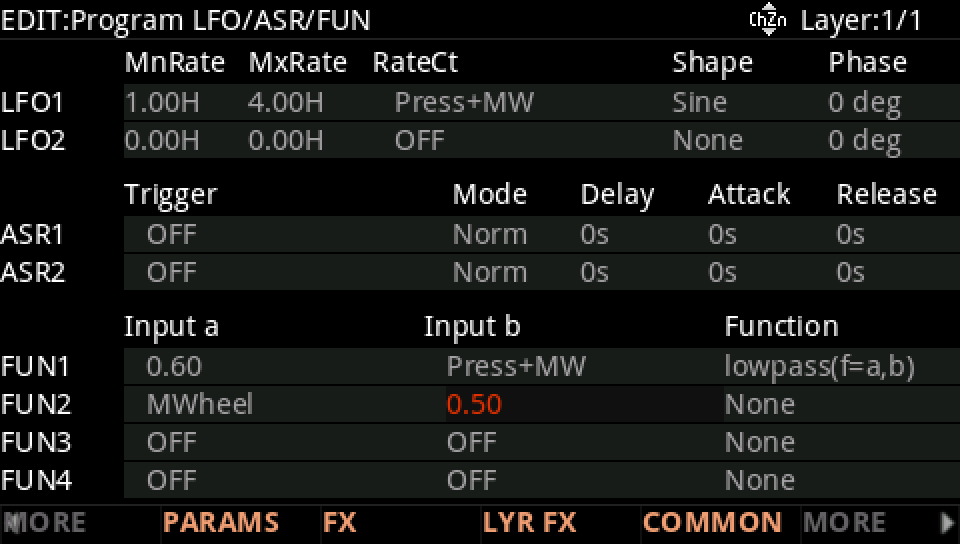
MORE, then LFO+. On the FUN2 row set Input a to MWheel and Input b to 0.50.
Move to Function and turn the Alpha Wheel to diode(a-b+.25).
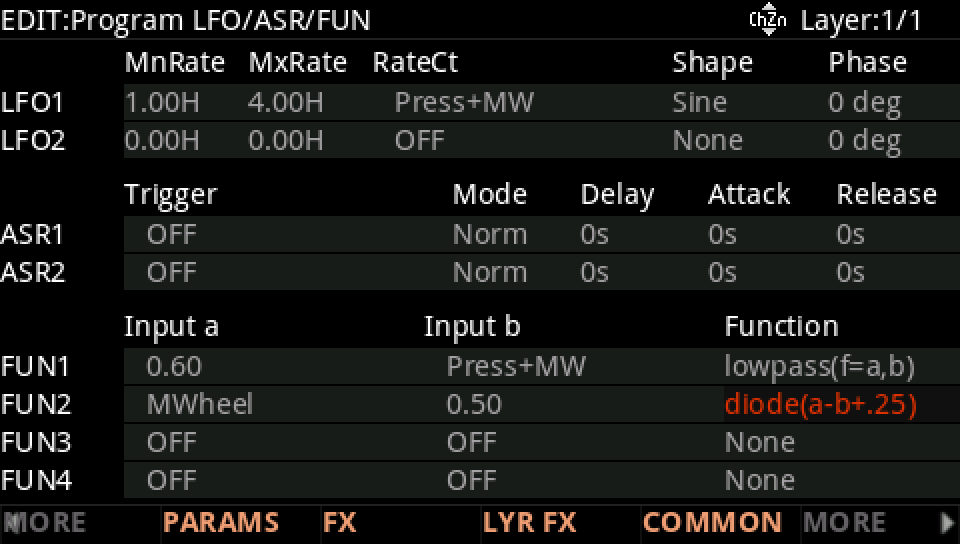
Move the mod wheel: nothing happens in its first quarter; then the pitch rises, to 900 ct at the top, wheel − 0.50 + 0.25.
Press EXIT and answer NO to leave the factory program as it was, or SAVE to keep your version on a USER ID.