Band pass, notch and all pass
FiltersBANDPASS · NOTCH · ALLPASSA band pass keeps a band around its frequency and turns down both sides; a notch takes that band out and keeps the rest. Their width is in octaves. An all pass keeps every level as it is and moves only the phase: on its own it changes little, against the dry sound it makes the notches of a phaser.
SEE IT MOVE
Computed in your browser with KINSPIRATION's DSP functions, sample by sample, their Pads at the factory's defaults.
WHAT TO KNOW
THE WIDTH
BP Width and Notch Wi are octaves: 0.3 a narrow band, 3 a wide one. The response's peak (or hole) is at the frequency.
TWIN PEAKS
TWIN PEAKS W/SEP places two band passes Sep apart around the frequency, each with its own width: two formants in four blocks.
USE IT FOR
A telephone or radio sound, a formant, a wah (the band moved by a pedal); a notch to tame one partial; an all pass mixed with the dry sound for phasing.
WATCH OUT
A narrow band on a low note may land between partials: little comes out. Widen it, or track it with the key.
IN THE FACTORY PROGRAMS
BANDPASS in 222 layers (median 277 Hz, 0.8 octaves wide), NOTCH in 148 (784 Hz), the all passes in 170.
BANDS, NOTCHES, ALL PASSES
FIND THEM ON YOUR K2700
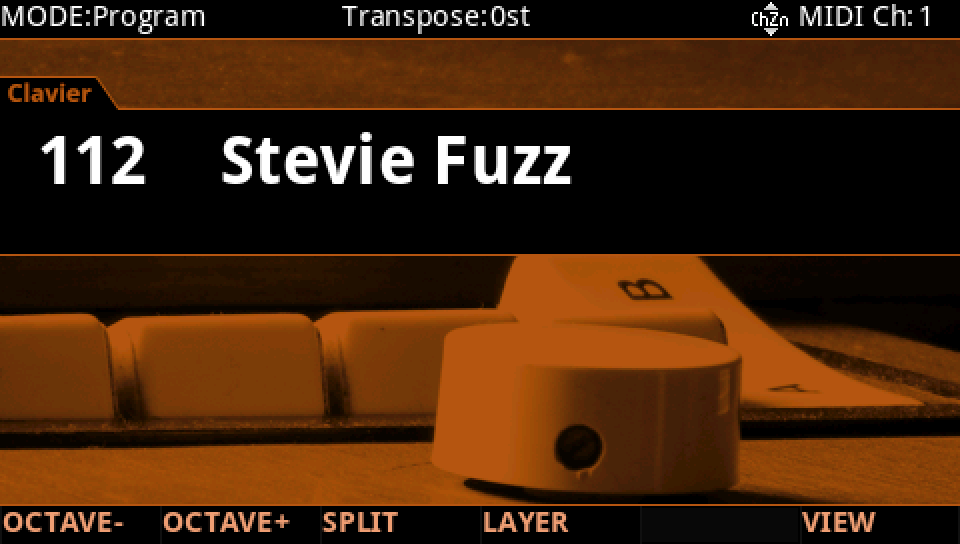
HOW TO ON YOUR K2700 · 112 Stevie Fuzz
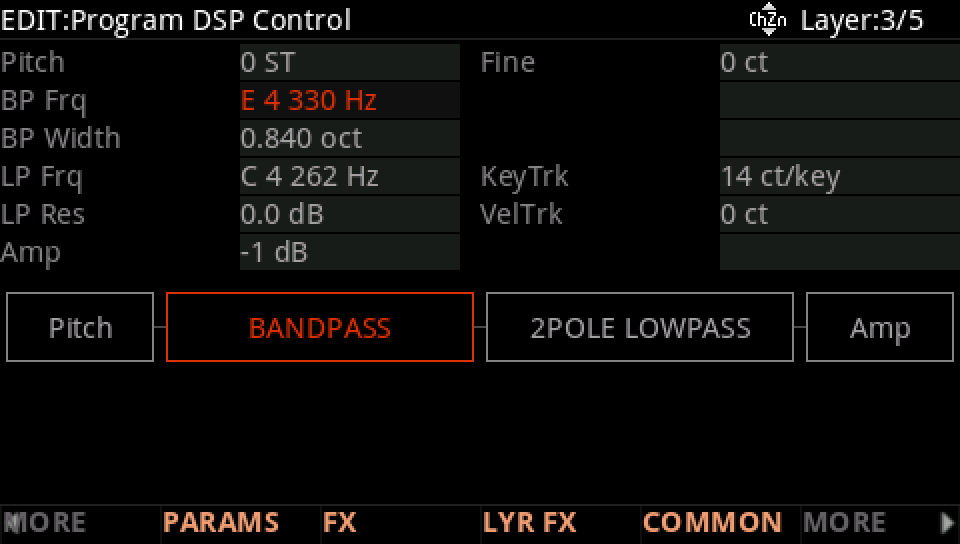
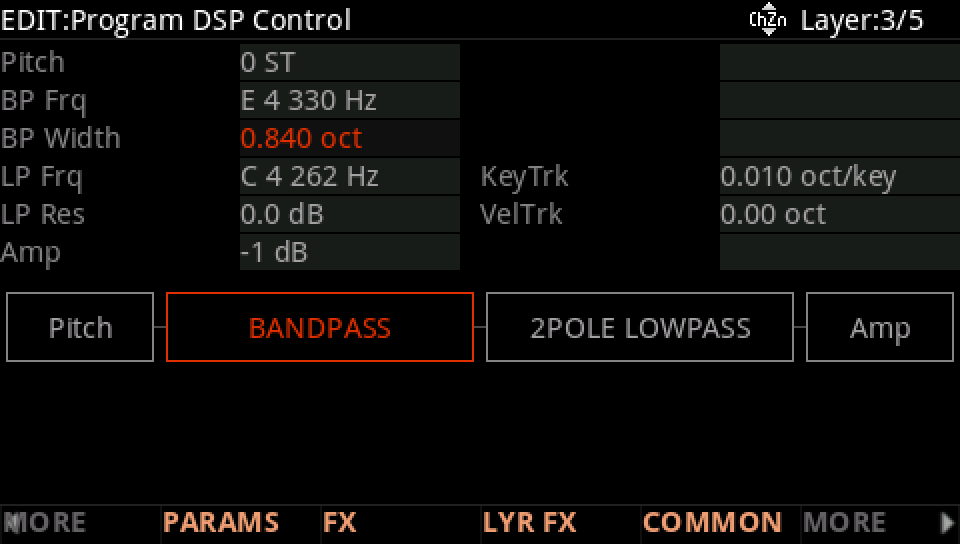
Stevie Fuzz's third layer starts with a BANDPASS: its frequency and its width.
In Program mode choose 112 Stevie Fuzz (KEYPAD, 112, ENTER).
Press EDIT, go to layer 3 with CHANNEL/LAYER ▲, then MORE and DSP CTL. The BP Frq row is E 4 330 Hz, the band's centre.
The BP Width row below it: 0.840 oct wide. Turn it down and the band narrows, fewer partials pass.
Press EXIT and answer NO to leave the factory program as it was, or SAVE to keep your version on a USER ID.